
Privacy Digest

News that can impact your privacy.
Login/Register
What is OpenID?
  • Log in using OpenID
  • Cancel OpenID login
  • Create new account
  • Request new password
Home Blogs MacRonin's blog
    • FAQ
    • Wishlists
    • Contact
    • Categories/RSS

Bookmark Us

Bookmark Privacy Digest 
Bookmark This Page 

Syndicate

Syndicate content
more

Advertisements

Tracking System
Tracking System
Private Detectives
Quality Security Services in California
Fleet Management
Hosting

Popular content

Last viewed:

  • Citigroup, law enforcement refute cyber heist report
  • Comcast: Patriot Act Mandates We Need Your SSN
  • Author of Torture, Spy Memos Was Just Doing His Job
  • Uses of Medical Histories Are Curtailed Under a New Law
  • What does Sarah Palin have to hide in her Yahoo e-mails?
  • ACLU And EFF Sue Justice Department To Uncover Records Of Cell Phone Tracking
  • Feds Can Search, Seize P2P Files Without Warrant

tags in Topics

Activists Alert Anonymity Companies Congress Copyright Court (US) Databases Data Mining Editorial EFF Entertainment Exploits Fourth Amendment Government Hmmm ID Infrastructure Law Enforcement Laws Politics Privacy Remember Reports Rights Security Spin Zone Surveillance Telecommunications Tracking
more tags

View blog authority
Congressional Research
Broadcast Flag

Twitter & FaceBook Tapping / Law enforcement and its social surveillance

Submitted by MacRonin on December 13, 2009 - 8:09pm
  • Activists
  • Alert
  • Companies
  • Court (US)
  • Data Mining
  • Databases
  • Editorial
  • Entertainment
  • Facebook
  • Government
  • Hmmm
  • Infrastructure
  • Law Enforcement
  • Legal
  • Privacy
  • Remember
  • Rights
  • Surveillance
  • Tracking
  • Twitter

Twitter Tapping: Via NYT > Privacy.

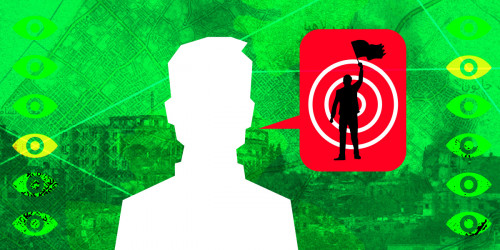
The government is increasingly monitoring Facebook, Twitter and other social networking sites for tax delinquents, copyright infringers and political protesters. A public interest group has filed a lawsuit to learn more about this monitoring, in the hope of starting a national discussion and modifying privacy laws as necessary for the online era.

Law enforcement is not saying a lot about its social surveillance, but examples keep coming to light. The Wall Street Journal reported this summer that state revenue agents have been searching for tax scofflaws by mining information on MySpace and Facebook. In October, the F.B.I. searched the New York home of a man suspected of helping coordinate protests at the Group of 20 meeting in Pittsburgh by sending out messages over Twitter.

In some cases, the government appears to be engaged in deception. The Boston Globe recently quoted a Massachusetts district attorney as saying that some police officers were going undercover on Facebook as part of their investigations.

Wired magazine reported last month that In-Q-Tel, an investment arm of the Central Intelligence Agency, has put money into Visible Technologies, a software company that crawls across blogs, online forums, and open networks like Twitter and YouTube to monitor what is being said.

This month the Electronic Frontier Foundation and the Samuelson Law, Technology and Public Policy Clinic at the University of California, Berkeley, School of Law sued the Department of Defense, the C.I.A. and other federal agencies under the Freedom of Information Act to learn more about their use of social networking sites.

The suit seeks to uncover what guidelines these agencies have about this activity, including information about whether agents are permitted to use fake identities or to engage in subterfuge, such as tricking people into accepting Facebook friend requests.

Privacy law was largely created in the pre-Internet age, and new rules are needed to keep up with the ways people communicate today. Much of what occurs online, like blog posting, is intended to be an open declaration to the world, and law enforcement is within its rights to read and act on what is written. Other kinds of communication, particularly in a closed network, may come with an expectation of privacy. If government agents are joining social networks under false pretenses to spy without a court order, for example, that might be crossing a line.

A national conversation about social networking and other forms of online privacy is long overdue. The first step toward having it is for the public to know more about what is currently being done. Making the federal government answer these reasonable Freedom of Information Act requests would be a good start.

Read Original Article:(Via NYT > Privacy.)

Bookmark/Search this post with:
  • Twitter Twitter
  • Digg Digg
  • StumbleUpon StumbleUpon
  • Technorati Technorati
  • del.icio.us del.icio.us
  • Facebook Facebook
  • Furl Furl
  • LinkedIn LinkedIn
  • Yahoo Yahoo
  • MacRonin's blog
  • Add new comment

Recent blog posts

  • Viacom Makes Its Case Against Yesterday's YouTube
  • Obama supports Senators draft plan to rework U.S. immigration policy - Includes National Biometric ID card for all.
  • Domain Names Can't Defend Themselves
  • Hacker Disables More Than 100 Cars Remotely
  • Judges Approves $9.5 Million Facebook ‘Beacon’ Accord
  • Hooking Up The Big Brother Machine... And Fighting It
  • Court: State Can Dump Non-Sex Offenders Into Registry
  • How Privacy Vanishes Online
  • Undercover Feds on Social Networking Sites Raise Questions
  • FBI Uses Fake Facebook Profiles To Spy On Suspects
more

Performancing Metrics

Compilation © Copyright 1997-2010 Paul Hardwick, with Web Hosting provided by MacRonin.com.